
A Small Building with a Big Lesson
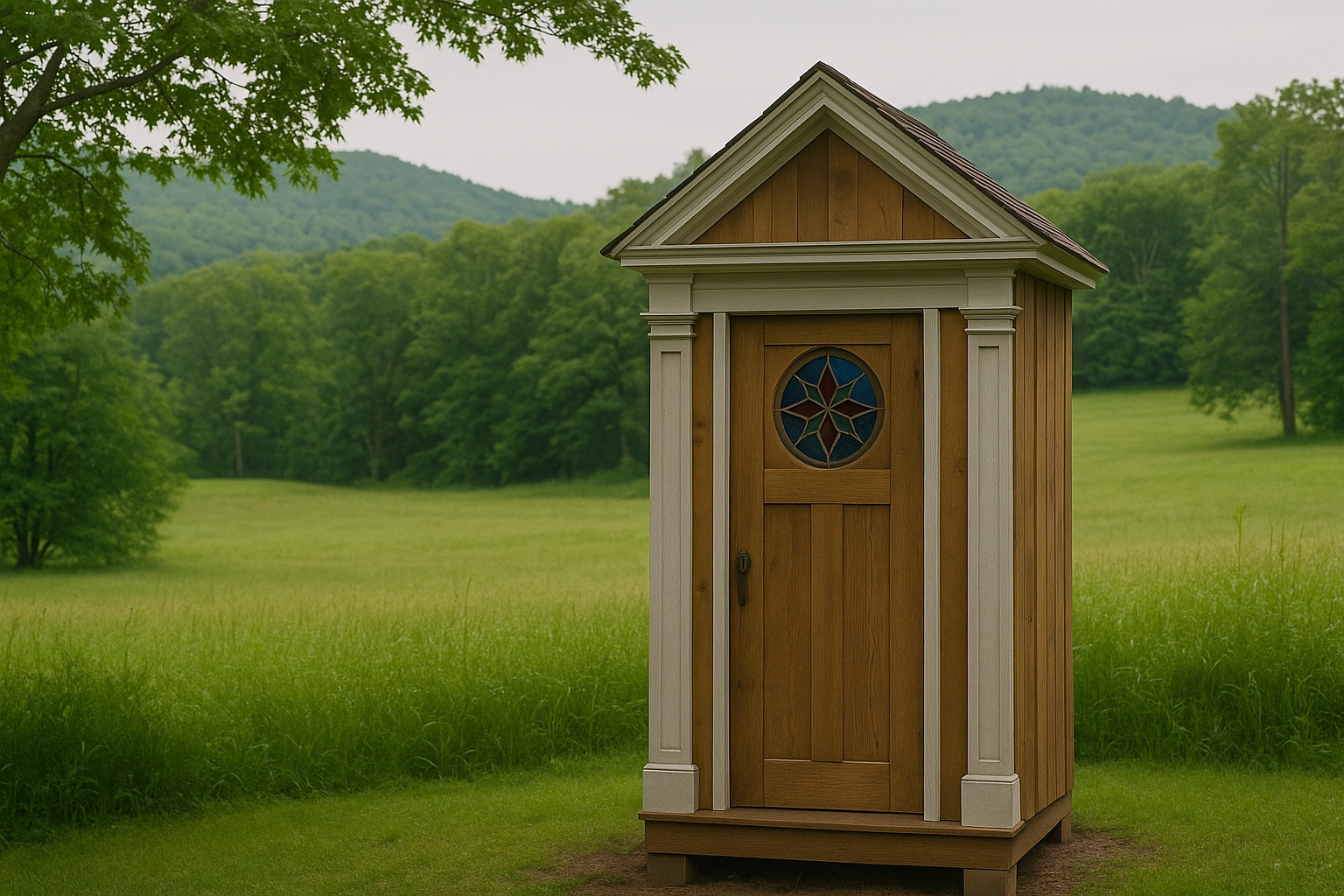
In a quiet Vermont village called East Barnard, a retired furniture maker has been building something humble and profound—a composting toilet behind the one old church, designed with care, and a stained-glass window.
At first glance, it’s attractive and practical.
Look more closely, and it offers a subtle reminder:
Even our most ordinary needs carry meaning, connection, beauty.
Life’s smallest moments are opportunities for presence. Like a meditation bringing awareness to this moment, this true story brings attention to the beautiful potential in caring for basic human experiences.
Hospitality as Mindfulness in Action
The outhouse will be open to the public, free of charge. “Hospitality is a spiritual practice,” according to an East Barnard Church Trustee. It isn’t just about convenience—it’s an act of care for visitors, hikers, and neighbors alike.
In mindfulness, presence is not only inward. It extends outward too. Small acts—holding space, listening deeply, offering truthfulness or comfort—can be living expressions of awareness. A thoughtfully crafted outhouse may not seem like meditation, but it reflects mindfulness principles: attentiveness, compassion, being grounded in the moment.
The Sacred in the Ordinary
The carpenter designed the outhouse with architectural flourishes, treating it as more than just utility. The result is practical and dignified—a reminder that the sacred isn’t found only in temples, yoga studios, or meditation halls. Practice teaches us that the ordinary—washing dishes, walking, or pausing to breathe—is enriched by presence and kindness. Approaching daily life attentively, we can transform dull routine into potent ritual, painful necessity into enjoyment of the ordinary.
This outhouse offers beautiful metaphor: even the simplest structure can carry dignity and reverence when built with a loving intention.
Mindfulness of the Body
Ancient Buddhist teaching reminds us that mindfulness is not about escaping the body—it’s about inhabiting it fully. Paying attention to our movements, sensations, and routines, we cultivate awareness in every moment, not just on the mat. The emerging outhouse, then, reflects what this teaching points toward: dignity and awareness belong everywhere, from life’s grandest occasions to its humblest moments.
“When going to the toilet, one knows: ‘I am going to the toilet.’ When standing, one knows: ‘I am standing.’ When sitting, one knows: ‘I am sitting.’ When lying down, one knows: ‘I am lying down.’” — Satipaṭṭhāna Sutta (an early Buddhist teaching on mindfulness)
Community and Renewal Through Presence
The East Barnard church, once dwindling, has found new life in recent years—services now include music, shared reflections, and interfaith openness. The outhouse is part of that renewal, a small but meaningful way of saying: “You belong here. We see your needs.” Mindfulness in community is about more than sitting in silence together. It’s about creating connections, support, and mutuality. Renewal doesn’t always require grand gestures—it often begins with meeting basic needs with presence and care.
If you’d like to experience this kind of renewal in your own life, join our community meditation and mindfulness sessions.
Finding Balance: Time as a Shared Human Practice
Across the world, people wrestle with how to spend their hours—how to balance obligation and rest, productivity and connection, doing and being. The Vermont carpenter’s mindful outhouse is one local expression of a universal question: how do we live well in time? Different cultures answer that question in beautifully varied ways.
In parts of Asia, long work hours and dedication to craft reflect a collective ethic of perseverance and duty. In Japan, this has sometimes gone to painful extremes, but recent movements toward ikigai —a sense of purpose anchored in joy—seek to restore balance. In northern Europe, boundaries are more defined: evenings and weekends are protected spaces for rest, family, and renewal. There, the right to disconnect is seen as both a moral and practical necessity. In much of Latin America and the Middle East, time is more fluid—relationships often take precedence over rigid schedules. Conversation may go longer than planned, not because someone is late, but because connection itself is the point.
Each rhythm holds both wisdom and shadow. A rush to fill every moment with doing risks erasing the quiet in which awareness blooms. Yet a too-relaxed flow can drift into avoidance. The Middle Way—not too tight, not too loose—invites us to see time not as an enemy or a possession, but as a companion, as part of who and what we are – nature, change.
Mindfulness offers a shared possibility across these approaches. Wherever we are, it invites us to pause and arrive—to give each moment its due. The outhouse in East Barnard does this in wood and glass: it honors a basic human act with presence and artistry, showing us that balance is not found by escaping necessities, but by meeting them with care.
When we bring awareness to how we schedule our days, how we respond to over-commitment, and how we share time with others, we practice an architecture of inner balance—the same way that carpenter built a small sanctuary for the body and spirit alike.
Shared Humanity and Interconnection
“We all poop. And we all depend on each other.” said the East Barnard Church Trustee mentioned above.
In a world where divisions run deep, acknowledging shared vulnerability grounds attention in one aspect of what matters most—interconnection. Our lives, choices, and struggles affect others too. Recognizing common humanity softens judgments and strengthens compassion. The outhouse could seem trivial. Give deeper attention and suddenly it offers a symbol of dignity and interdependence.
We are all human, and we are all worthy of care.
Healing, connection, and balance often arise not from escaping the ordinary, but from leaning into it with awareness and care. When we bring mindfulness to the everyday, we discover that the sacred is already here—waiting in the simplest of gestures.