
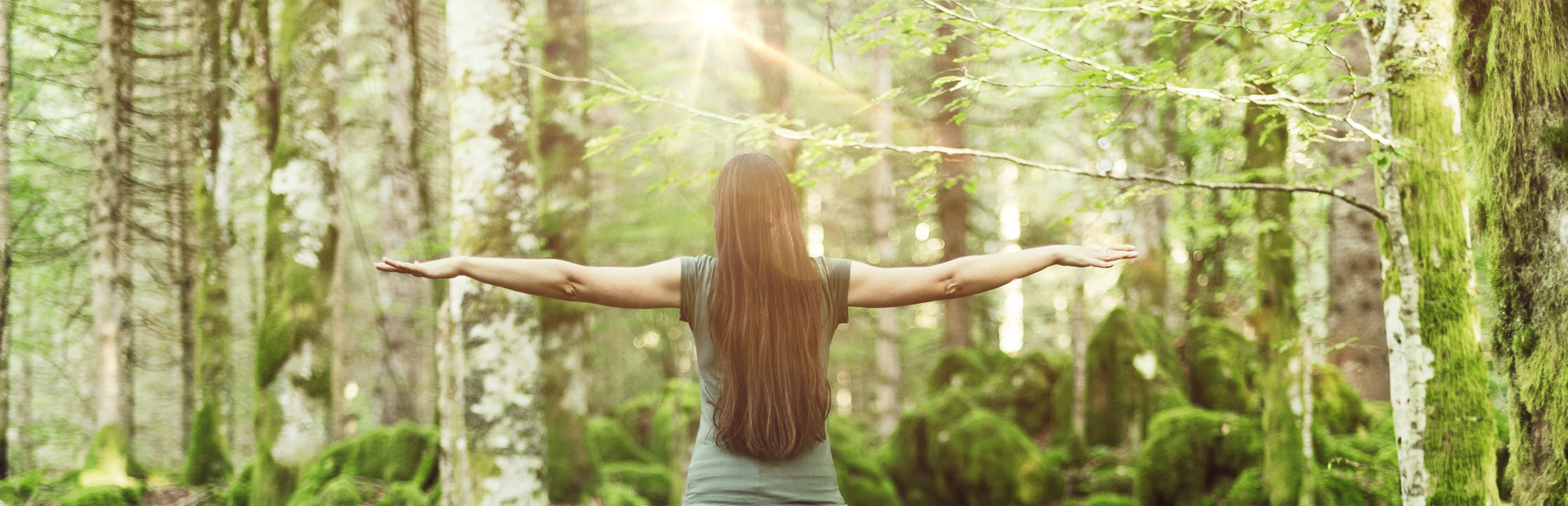
Reflections for the Middle of Summer
In the northern hemisphere, this is traditionally a time for rest. The fields grow tall with ripening crops, schools are quiet, and many people take time away from work. Summer invites us to pause, breathe, and simply be. Yet for many of us, even vacations have become tasks to manage. The drive to get it done right — so central to contemporary work culture — often follows us like a heavy shadow into time off.
As I reflect on this, I wonder if it is in part because of how easily rest turns into another to-do-list item, something else to complete, optimize or perfect. Something we’re supposed to do well — or feel guilty about not doing at all. The thing is, true rest does not respond well to pressure. It asks us for something different – to release. To renounce.
Renunciation may sound like a heavy word. But in the Buddhist tradition, it’s actually a joyful practice — a letting go that makes room for peace. When we renounce the constant striving to achieve or improve, even for a little while, we create space. Space for life to move at its own pace. Space for presence. Space for wonder. Space for the subtle rhythms of our nervous systems to re-calibrate.
Doing nothing, in this sense, isn’t a failure. It’s a profound skill. One that many of us have forgotten how to practice.
A Happy Renunciation Exercise
This summer, perhaps you’ll join me in a simple experiment: Step outside. Sit or lie down comfortably. Now…
- Let go of the need to be productive.
- Set down the urge to improve yourself.
- Release of the idea that you’re falling behind.
- Feel the air touching your skin and let the stillness wash over you.
- Recognize this moment of renunciation as a blessing — not a deprivation.
And if “just letting go” feels hard (as it often does), here are two gentle, real-world practices that might help:
STOP Mini-Practice
One of the key exercises from the Mindfulness Based Stress Reduction (MBSR) program, here’s quick way to disrupt the momentum of doing and invite a moment of presence:
S – Stop. Pause whatever you’re doing.
T – Take a breath. A slow, full inhale and exhale.
O – Observe. Notice what’s happening in your body, emotions, and mind.
P – Proceed. Choose your next action with awareness.
Try it while standing at the sink, before answering an email, or right as you step outside to explore the first invitation above. It can shift the whole mood of the moment.
Guided Imagery & Nature Micro-Practices
You don’t need to be in a forest or lie down for an hour. Try pausing for 30 seconds to:
- Feel the air on your skin.
- Listen for birdsong, leaves rustling, or silence.
- Let your eyes soften and gaze at something green or spacious.
- Imagine your whole body resting on the earth, as it is.
Let nature remind you that nothing rushes, yet everything unfolds.
If you’re inspired, take a bit of time each day to practice this joyful kind of renunciation. Unplug. Un-hurry. Un-should yourself from the weight of constant doing. Your life is not a project. Your rest is not a performance. Your being — just as it is — is already enough.
And if you’re curious how mindfulness and movement might help you recover the radical pleasure of simply being, join us for an upcoming class or, for a deeper dive, a retreat. But only if it feels like a relief — not another task. If everything feels like a task, consider our Mindful Living for Caregivers, which aims to help shift that chronic sense of always having to do something (to help).